
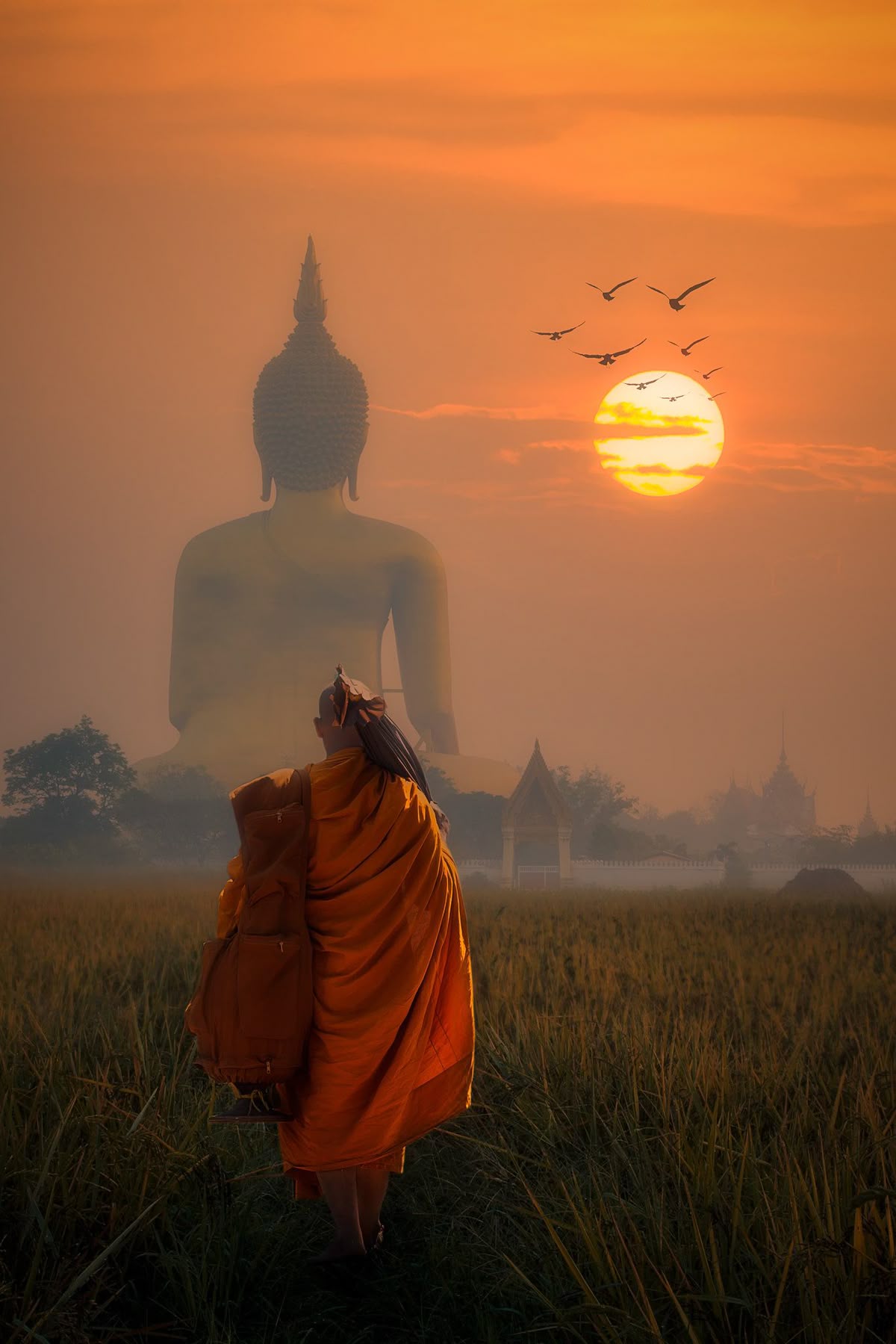
What is Buddhism?
When people talk about Buddhism, many think of visiting temples for leisure, where it's said that burning large incense sticks can bring wealth and career success; lighting long-bright lamps or ten-thousand Buddha lamps in temples is believed to ensure promotion, prosperity, and growth in blessings and wisdom; chanting sutras, performing repentance ceremonies, and holding vegetarian feasts are thought to dispel disasters, prolong life, and remove karmic obstacles; or even encountering street "monk"-dressed scammers holding donation books or amulets, stopping pedestrians for money, or using divination tools like trigrams or fortune sticks to tell fortunes or read faces... A large portion of the public mistakenly believes this is what Buddhism is.
But is this really Buddhism?
The Meaning of the Term "BUDDHISM"
In Pāḷi, Buddhism is referred to as *Buddha-sāsana*.
*Buddha* means "the Enlightened One." This is a phonetic transcription from ancient Indian languages, and its modern pronunciation approximates "Buddha." It refers to one who has awakened, a person who has realized the truth of the world and life. *Sāsana* means teaching, doctrine, or instruction. Therefore, "Buddhism" translates to the teachings of the Buddha, or the teachings of the Enlightened One.